♨ Heat trapped at the bottom of the crate
One research finding highlights a useful opportunity. Heat trapped at the bottom of larval crates can support black soldier fly rearing in cooler climates.
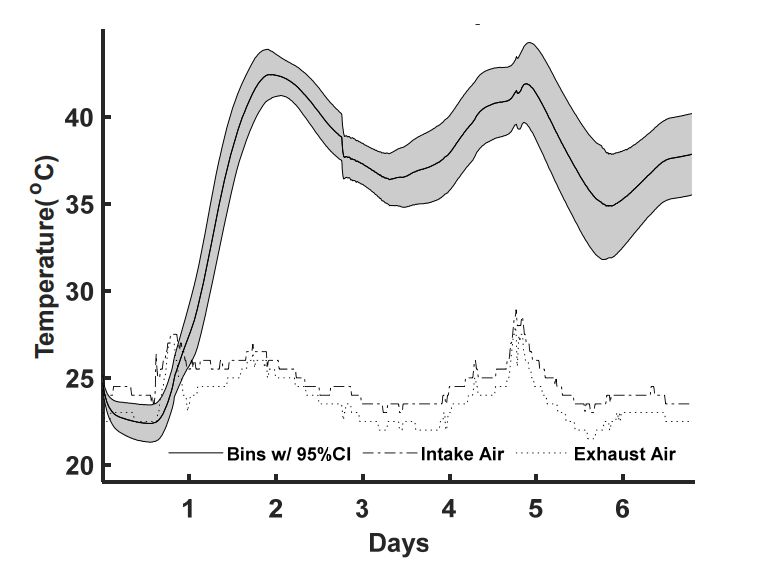
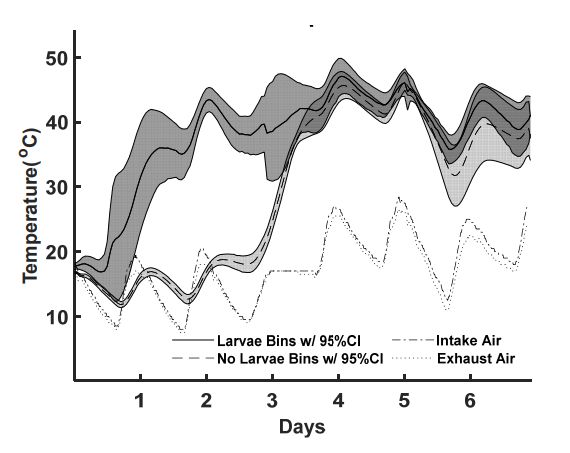
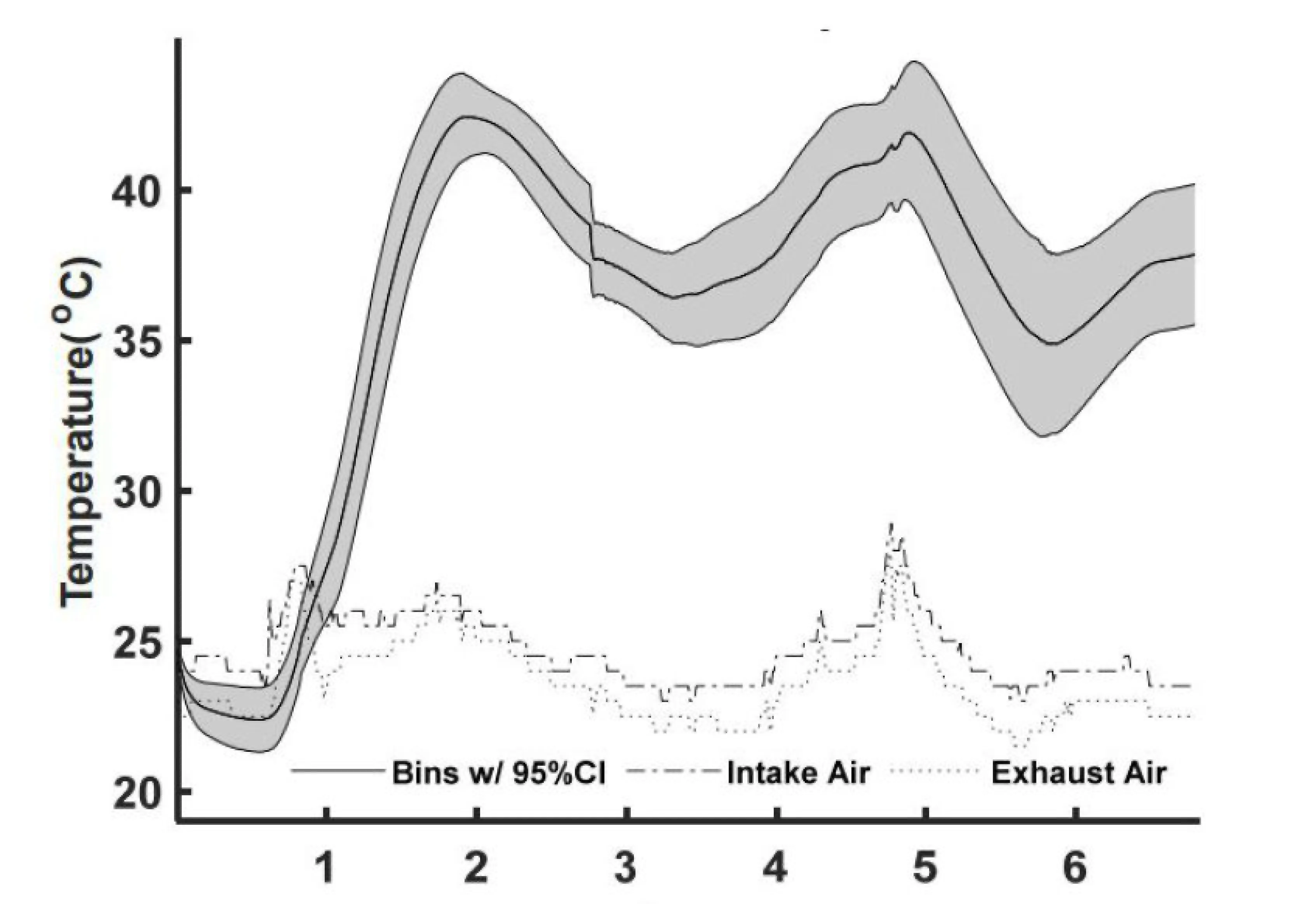
Crates containing larvae (>11,000 larvae, 0.75 g feed per larva) warm up quickly. In contrast, crates without larvae follow the intake air temperature during the first 2–3 days. After this period, these crates gradually reach temperatures similar to those with larvae.
The intake and exhaust air temperatures differ by only 1–2°C. Some heat exchange likely occurs between the hot crates (>40°C) and the cooler air (~20°C). However, this exchange remains limited. The airflow does not carry away much heat. Instead, most heat from larval and microbial activity stays inside the substrate. The bottom layer shows the highest temperature. The air also moves too quickly through the bins to absorb significant heat.
This retained heat offers practical value. Decomposing waste generates thermal energy that farmers can reuse. This becomes especially useful in cooler regions, where larvae struggle with low temperatures. The species Hermetia illucens naturally prefers warm conditions and shows limited cold tolerance.
Farmers can improve heat retention by insulating larval bins. This approach reduces the need for external heating and lowers energy costs.
#blacksoldierfly #wastemanagement #heatmanagement