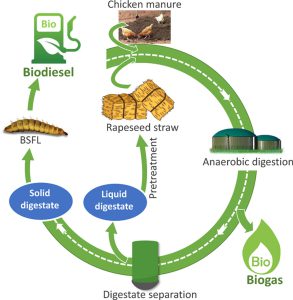
Anaerobic digestion, a fascinating waste treatment

Anaerobic digestion, waste treatment process, is rapidly gaining attention for its potential to transform organic waste into valuable bio-methane, a renewable biofuel or energy source. This article looks at anaerobic digestion, focusing on its ability to produce bio-methane from insect frass and its applications in insect production facilities and agricultural practices.
Understanding Frass: A Defined Biomass
Frass is defined by the European Commission Regulation (EU) 2021/1925. It is a mixture of insect excreta, feeding substrate, insect parts, and small amounts of dead insects.
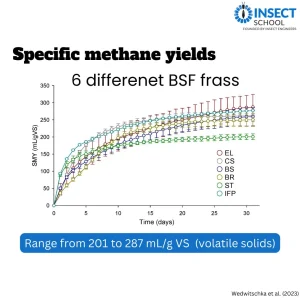
Researchers have tested six types of insect frass. These samples come from larvae fed on different materials. As a result, the findings highlight the diverse potential of this biomass.
Methane Yield and Agricultural Residue Comparison
The specific methane yield (SMY) of frass ranges from 201 to 287 mL/g VS. In comparison, this is similar to traditional livestock residues such as cattle, pig, and chicken manure.
Black Soldier Fly (BSF) frass shows strong performance. In particular, frass from larvae fed on water-seeds achieved the highest methane yield.
Therefore, insect frass presents a promising option for methane production. It can serve as a valuable alternative substrate in bioenergy systems.
Addressing Corn Silage Shortages in Biogas Plants
In agricultural biogas plants in Germany, corn silage has been a staple substrate alongside cattle manure. However, recent drought years, specifically in 2021 and 2022, led to corn silage shortages in certain regions. The scarcity adversely affected annual energy production and profitability for dairy farming and individual biogas plants. The solution may lie in alternative agricultural residues like BSF frass, offering a potential replacement for corn silage feedstock during periods of low substrate supply.
Energy-Efficient Hygienization of Insect Frass
Utilizing insect frass in agriculture requires proper sanitization, traditionally achieved through processes like heating, pelleting, or extrusion, which demand substantial energy input. Researchers, led by Wedwitschka et al. (2023), propose a thermophilic (38 Celsius) digester system as a potential energy-efficient solution for hygienizing BSF frass. This innovative approach, with or without an additional composting stage, could revolutionize the sanitization process, making it more sustainable and cost-effective.
Anaerobic digestion stands at the forefront of waste treatment innovations, offering not only a solution for organic waste management but also a pathway to sustainable energy production. The potential of insect frass in bio-methane production, coupled with its applications in addressing substrate shortages in biogas plants, showcases the versatility and importance of this waste treatment method. As researchers continue to explore and refine anaerobic digestion processes, it is evident that the future holds promising advancements in waste-to-energy technologies, contributing to a cleaner, more sustainable planet.
For more information about
- Insect bioconversion of waste, please contact us at the Insect school. https://www.insectschool.com/
- Turnkey insect farms – https://www.insectengineers.com/bsfturnkey/production
If you would like to book BSF industry keynote speaker Bob Holtermans for your event – https://www.insectengineers.com/about-us/speaker-bobholtermans