Novel Feed: Transforming the way we feed and farm Black Soldier Fly Larvae

In the quest for sustainable and scalable solutions to address the protein deficit, the Centre for Novel Agricultural Products (CNAP) at the University of York is pioneering a groundbreaking approach. Their research focuses on transforming the traditional feed for black soldier fly larvae (BSFL), a crucial player in the insect farming industry, by utilizing abundant, inedible agricultural by-products.
Challenges in BSFL Production: A Call for Innovation
Black soldier fly larvae (BSFL) are a promising source of protein and valuable by-products. However, scaling production remains a major challenge.
Current systems rely heavily on food waste as feedstock. As a result, producers face geographical dispersion and seasonal variability. These factors lead to unstable yields and unreliable supply chains.
Therefore, new solutions are needed to improve consistency and scalability.
The CNAP Solution: Patented Agritech/Biotechnological Innovation
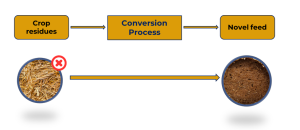
CNAP is developing a new approach to BSFL production. Specifically, it combines inedible agricultural by-products with a patented agritech solution.
This approach reduces dependence on traditional feedstocks. In addition, it converts low-value materials into nutritious feed for insects.
As a result, producers can achieve more stable and efficient production systems.
AI and Machine Learning: Paving the Way for Precision Agriculture
CNAP also uses artificial intelligence and machine learning. These tools analyze large datasets quickly. As a result, they help identify the best feedstock materials.
Moreover, they optimize processing conditions and production workflows. This improves both efficiency and consistency.
By doing so, the system supports a more scalable and data-driven approach to insect farming.
Unlocking the Potential of Underutilized Resources
Another key advantage is the use of underutilized agricultural by-products. Materials like wheat straw are often abundant but low in value.
However, CNAP transforms these materials into high-quality feed for BSFL. In turn, this reduces waste and improves resource efficiency.
Ultimately, this approach supports a more sustainable and transparent supply chain.
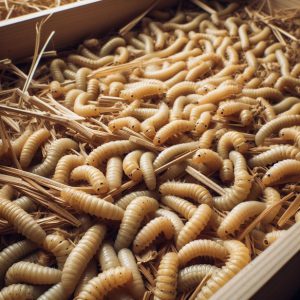
CNAP’s pioneering work in transforming the feed for black soldier fly larvae represents a paradigm shift in the insect farming industry. The use of AI and machine learning, coupled with innovative agritech/biotechnological solutions, offers a more sustainable and scalable model for BSFL production. By turning abundant, inedible agricultural by-products into valuable feed, they foster a more sustainable and circular approach to protein production.
For more information about the work carried out at CNAP please contact:
Banushan Balansethupathy (banushan.balansethupathy@york.ac.uk)
Daniel Leadbeater (Daniel.leadbeater@york.ac.uk)
For more information about
- Insect bioconversion of waste, please contact us at the Insect school. https://www.insectschool.com/
- Turnkey insect farms – https://www.insectengineers.com/bsfturnkey/production
If you would like to book BSF industry keynote speaker Bob Holtermans for your event – https://www.insectengineers.com/about-us/speaker-bobholtermans