Unlocking the potential of the black soldier fly manure

Unleashing the Potential of Black Soldier Fly Frass: A Renewable Biofuel and Agricultural Amendment
Frass is the mixture of insect excreta and residual feed substrate. It is emerging as a versatile resource in insect farming. Notably, it can produce biomethane, a renewable biofuel for insect production facilities, especially breeding centers.
The European Commission Regulation (EU) 2021/1925 defines frass clearly. It includes insect excreta, feeding substrate, insect parts, and small amounts of dead insects.
Black Soldier Fly larvae fed on various materials
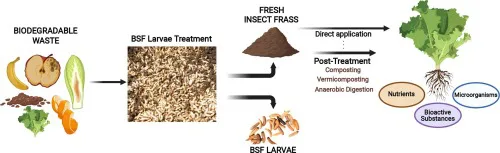
A recent study by Wedwitschka et al. (2023) examined the bioenergy potential of frass from Black Soldier Fly (BSF) larvae. The larvae were fed on different materials. These included corn silage (CS), brewer’s spent grain (BS), and thin stillage (ST). They also included aquatic plants from the Elodea genus (EL), wheat bran (BR), and pilot plant frass (IF_PP).
The highest methane observed methane yield
The specific methane yield (SMY) ranged from 201 to 287 mL/g VS. This is comparable to traditional livestock residues such as cattle, pig, and chicken manure.
The highest methane yield came from larvae fed on aquatic plants. Cereal grains followed next. Corn silage, brewer’s spent grain, and wheat bran showed lower yields.
Methane yield 140 m3/ton
On a fresh matter basis, frass from cereal-fed larvae reached about 140 m³ per ton. This exceeds corn silage, which produces around 110 m³ per ton.
This difference is important. It shows that frass can replace corn silage in biogas production, especially during supply shortages.
Alternative agricultural residue
Corn silage shortages during 2021 and 2022 affected biogas production in parts of Germany. In many cases, reserves were redirected to dairy farming.
BSF frass offers a practical alternative. It can reduce dependence on corn silage and help stabilize energy production.
Utilization of insect frass as a soil amendment
Current regulations require heating at 70°C for one hour. However, methods like pelleting or extrusion require high energy input.
To address this, researchers suggest thermophilic digestion at around 38°C. This method may provide a more energy-efficient sanitation process. It can also be combined with composting for added safety.
The research by Wedwitschka et al. showcases the untapped potential of BSF frass as a renewable biofuel and a valuable substitute for traditional biogas substrates. As we explore sustainable alternatives in energy production and agriculture, the Black Soldier Fly, with its transformative frass, emerges as a key player in the journey towards a greener and more efficient future.
For more information about:
- Insect Bioconversion of Waste, please contact us at the Insect school. https://www.insectschool.com/
- Turnkey Insect Farms – https://www.insectengineers.com/bsfturnkey/production
- If you would like to book BSF industry keynote speaker Bob Holtermans for your event – https://www.insectengineers.com/about-us/speaker-bobholtermans