From Hatchling to Pre-Pupal
BSF Development Stages: Identifying Larval Growth Phases
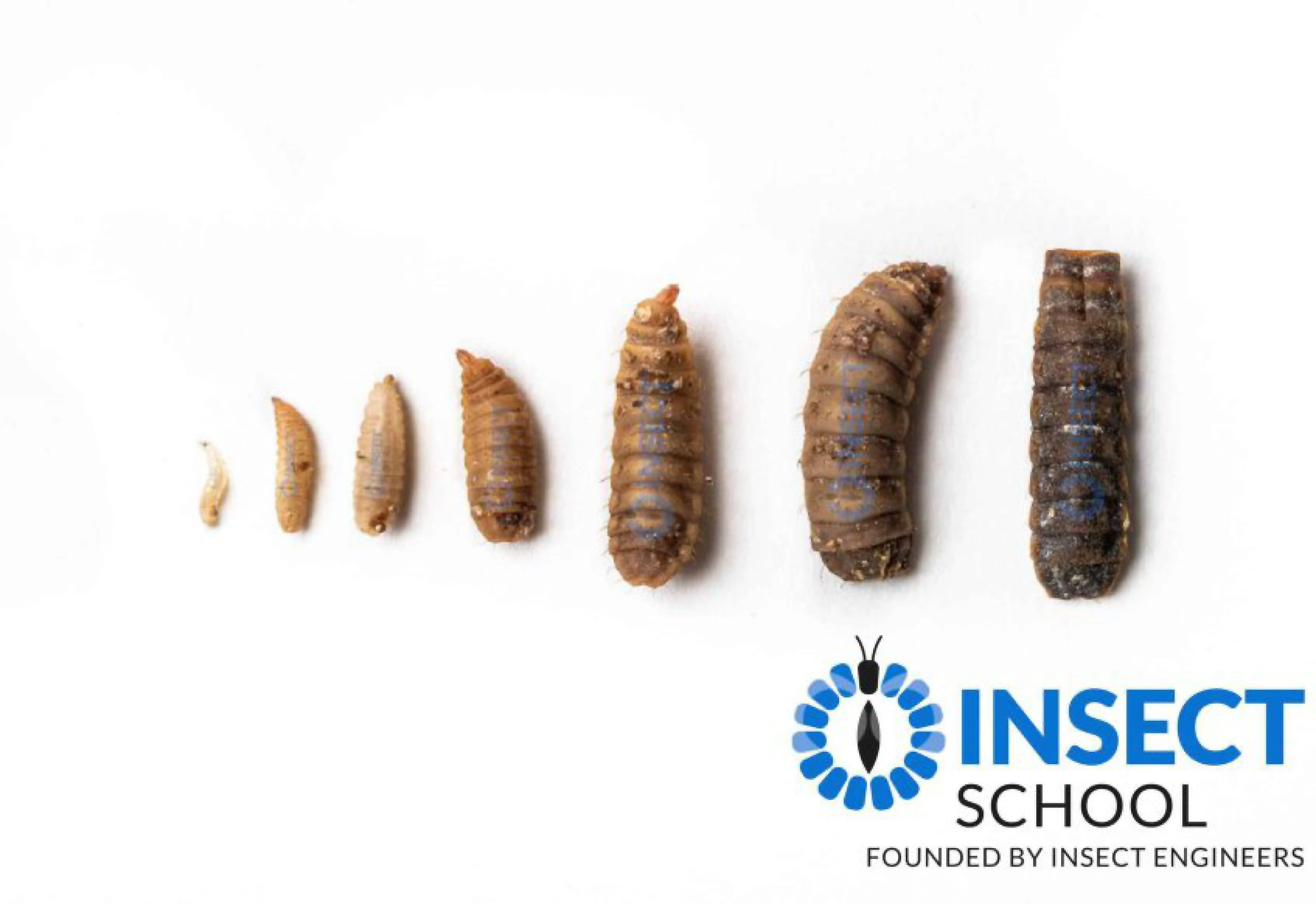
Understanding BSF development stages is essential for effective rearing and process optimization. You can identify each stage by observing head capsule size (e.g., mouthparts) and molting events, such as the shedding of skins between feeding larvae and the pre-pupal stage.
First Instar (Neonate)
The first instar begins when larvae hatch from eggs. These newly hatched larvae are also called neonates.
Within 24 hours, they molt into the second instar.
Second Instar
The second instar lasts about two days. During this period, body mass and head capsule size change only slightly.
However, internal development continues steadily.
Third and Fourth Instar
From the second instar onward, development accelerates. The third and fourth instars each last about one day.
As a result, larvae grow rapidly during this phase.
Fifth Instar
The fifth instar lasts around two days. This stage provides a useful window for management actions.
For example, farmers can perform tipping or re-feeding during this period.
Sixth Instar
The sixth instar is the longest feeding stage. It lasts about eight days. During this time, larvae actively consume feed and gain significant mass.
Eventually, they molt by shedding their old skin.
Seventh Instar (Pre-Pupal Stage)
The seventh instar marks the transition to the pre-pupal stage. At this point, mouthparts reduce in size.
Consequently, larvae stop feeding and prepare for pupation.