Waste Management with BSF
Waste Management with BSF Farming
Organic waste is one of the major environmental challenges today. The Food and Agriculture Organization (FAO) reports that about one-third of all food produced for human consumption is lost or wasted each year. This equals around 1.3 billion tons of food waste globally.
This waste creates a major economic loss. It also contributes significantly to greenhouse gas emissions. In landfills, organic waste decomposes without oxygen. This process releases methane, a powerful greenhouse gas that drives global warming.
Real-World Examples of BSF Farming
BSF farming is still a relatively new concept. However, several companies already apply it successfully around the world.
For example, one of our clients operates a BSF facility that processes up to 100 tons of organic waste per day. The company uses larvae from this system to produce sustainable animal feed for the aquaculture industry.
The benefits of BSF farming are numerous:
- It reduces organic waste by up to 95%, as black soldier fly larvae can consume up to twice their body weight per day. This means less waste going to landfills and less methane emissions.
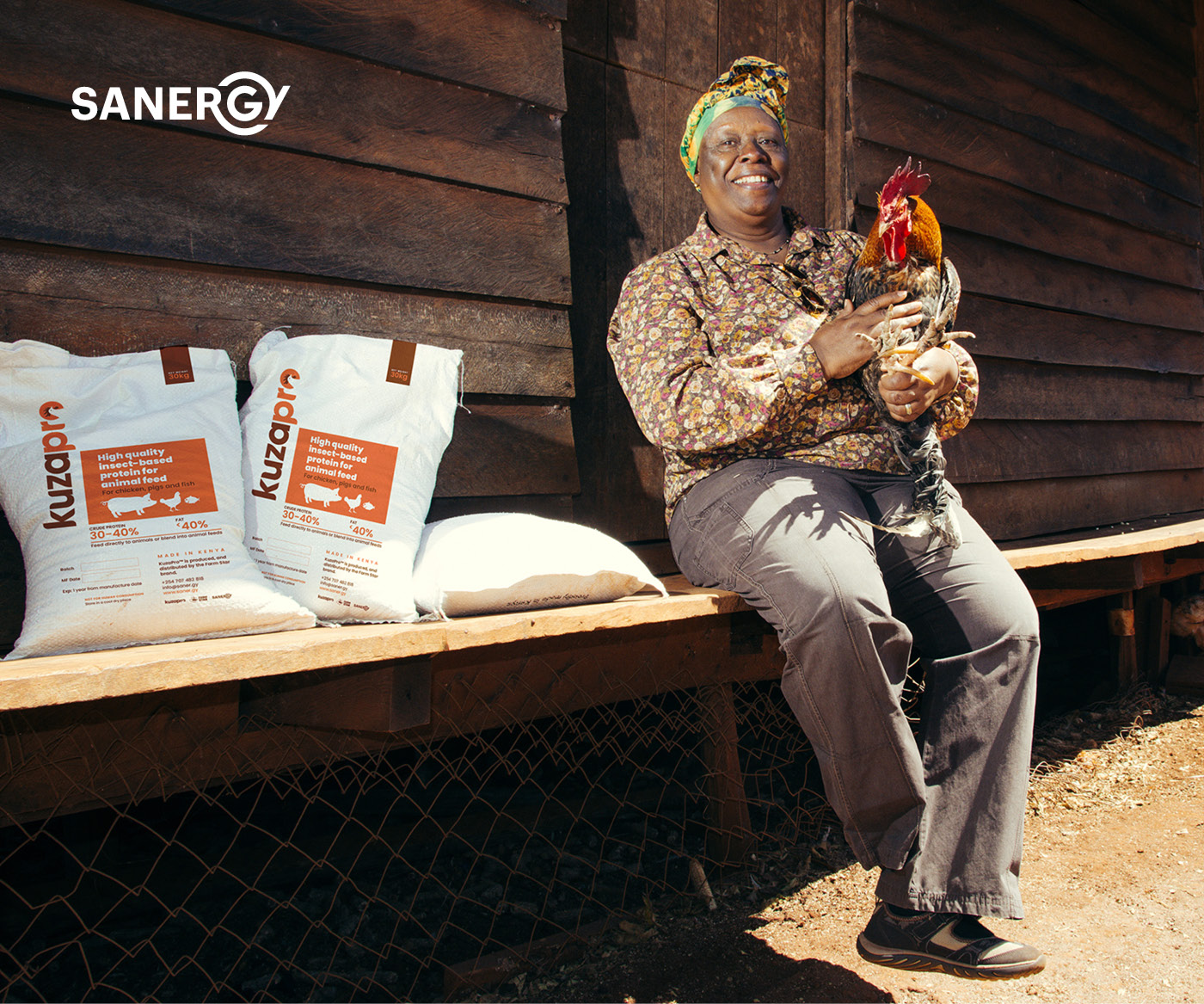
- It produces high-quality protein-rich biomass that can be used as animal feed for poultry, fish, pigs, or pets. Black soldier fly larvae contain up to 60% protein and essential amino acids, making them an ideal alternative to conventional feed sources that are often expensive or unsustainable.
- It generates other valuable by-products that can be used for various purposes. For example:
- The frass (excrement) of black soldier fly larvae can be used as organic fertilizer for crops, as it contains a ton of nutrients.
- The oil extracted from black soldier fly larvae can be used as biofuel for vehicles or generators, as it has similar properties to diesel fuel.
- Chitin from BSF larvae can be used to produce biodegradable materials. It supports packaging and medical applications. It also has antibacterial and antifungal properties.
BSF farming is an innovative and sustainable form of insect farming. It offers both environmental and economic benefits.
This system converts organic waste into valuable biomass. As a result, it helps reduce greenhouse gas emissions. It also supports food security and improves soil quality. In addition, it saves natural resources and creates income opportunities for farmers and entrepreneurs.
If you want to learn more about BSF farming, you can explore our online courses. They provide practical guidance on how to start and manage a successful BSF farm.
Subscribe to our LinkedIn:
https://www.linkedin.com/company/insect-school/