Visual System of Adult Black Soldier Flies: Ocelli and Compound Eyes

The visual system of adult black soldier flies (BSF) is highly specialized. It consists of two simple eyes, called ocelli, and a pair of large compound eyes.
These organs help BSF navigate their environment. They also detect threats and respond quickly to changes in light.
In this article, we explore the structure and function of ocelli and compound eyes. In particular, we highlight their role in survival and behavior.
Ocelli
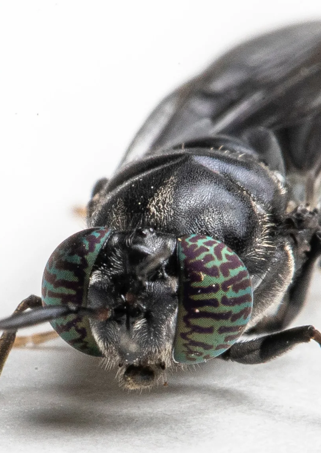
The ocelli enable rapid responses to light changes. They act as important sensory organs in adult BSF.
These simple eyes sit on top of the head. As a result, they provide a wide field of view. This helps the flies perceive their surroundings more effectively.
Ocelli also help detect sudden changes in light intensity. Therefore, BSF can quickly avoid obstacles and predators. This allows for fast evasive movements.
Compound Eyes
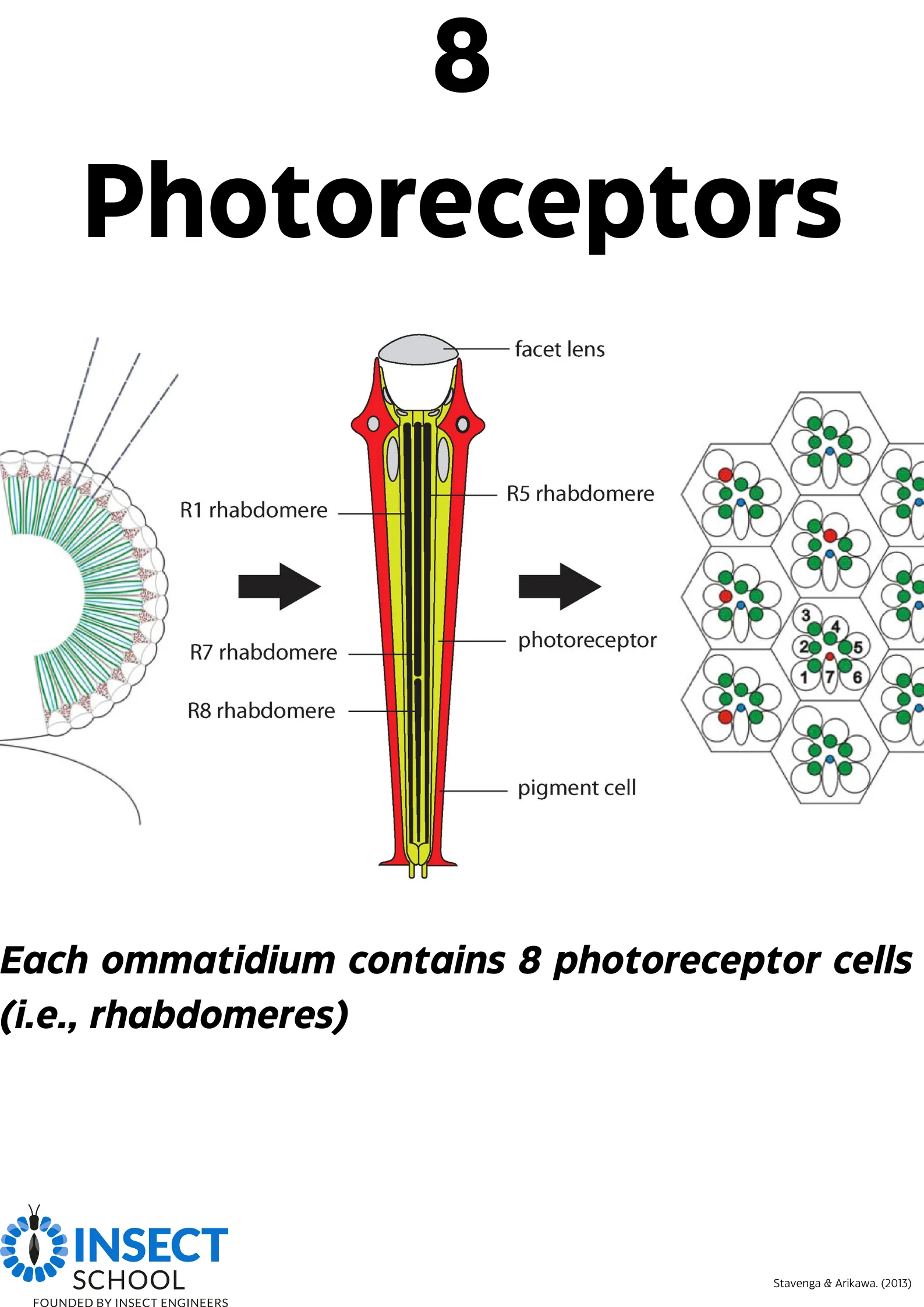
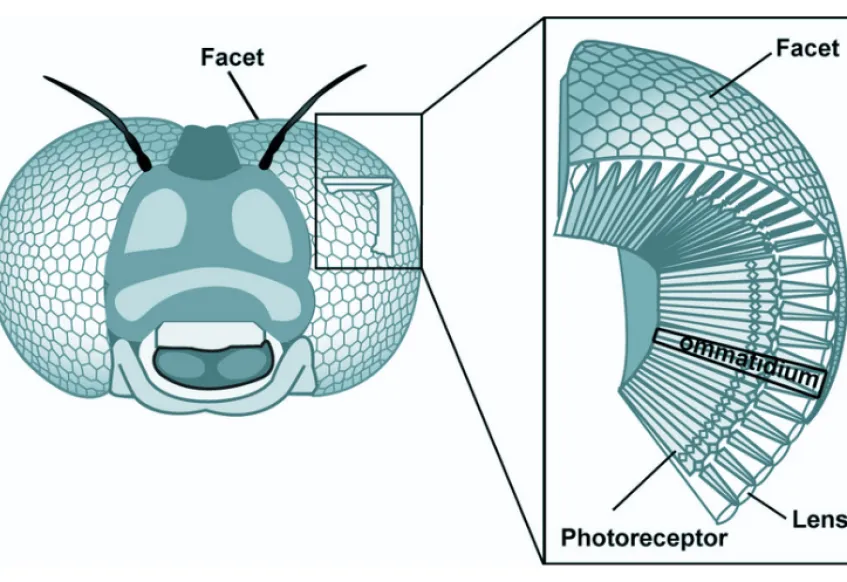
Complex Structures for Vision The compound eyes of adult BSF are intricate structures composed of over a thousand small units known as ommatidia. Each ommatidium contains six photosensitive parts called rhabdomeres (R1-R6), positioned at the periphery, with two additional rhabdomeres (R7, R8) located at the center.
Functionality of Rhabdomeres
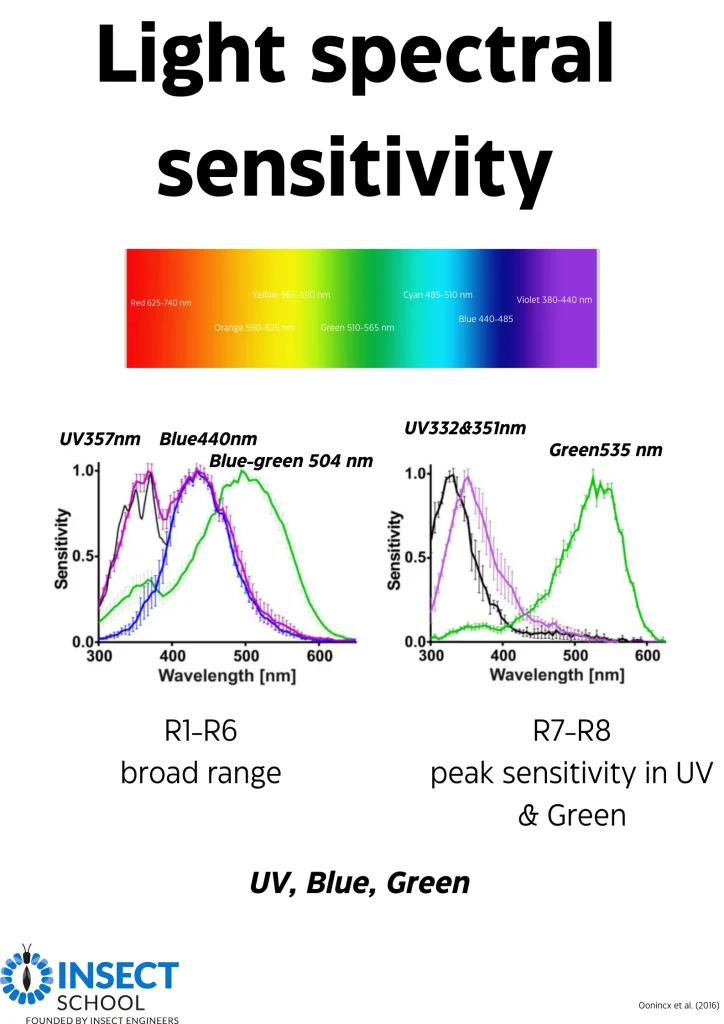
The rhabdomeres R1-R6, situated at the periphery of the ommatidium, represent a spectrally homogeneous class of photoreceptors with broad spectral sensitivity. These photoreceptors are primarily responsible for motion detection, allowing BSF to discern movement in their environment. However, they exhibit limited ability for color discrimination, except in the case of Drosophila.
Distinct Sensitivities of R7 and R8
In contrast, the photoreceptors R7 and R8, located at the center of the ommatidium, possess narrow spectral sensitivities. R7 is most sensitive to ultraviolet (UV) light, while R8 exhibits peak sensitivity to blue or green light. This arrangement provides BSF with a tri-chromatic vision system, enabling them to perceive the environment through three channels: UV, blue, and green.
In conclusion the visual system of adult black soldier flies is a marvel of evolutionary adaptation, comprising both simple and compound eyes that work synergistically to provide the flies with remarkable sensory capabilities. The ocelli enable rapid responses to changein light intensity, while the compound eyes offer complex vision through a combination of motion detection and color discrimination. Understanding the intricacies of the BSF visual system not only enhances our knowledge of insect physiology but also highlights the remarkable adaptations that enable these flies to thrive in diverse environments.
For more information about:
- Insect Bioconversion of Waste, please contact us at the Insect school. https://www.insectschool.com/
- Turnkey Insect Farms – https://www.insectengineers.com/bsfturnkey/production
- If you would like to book BSF industry keynote speaker Bob Holtermans for your event – https://www.insectengineers.com/about-us/speaker-bobholtermans