BSF Knowledge Base
School & Test Center
Key Markets
News
Contact us
About us
small-logo
June 22, 2023
Breeding
Bob Holtermans
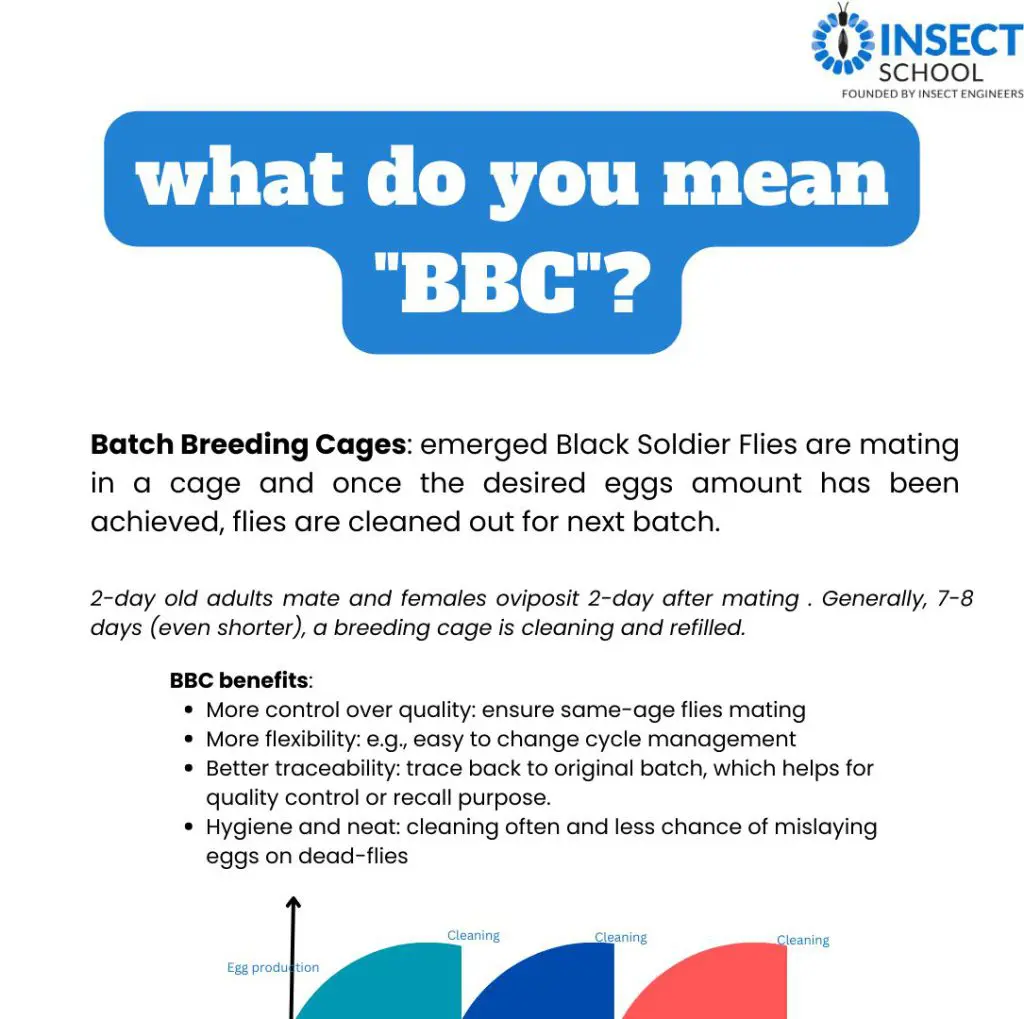
Q&A: What do you mean “BBC”?
Did you like this article?
Don't forget to share
Back to overview
Next article
Q&A: What do you mean “BBC”?
The 5 Most Popular Articles
October 4, 2023
BSF production: predictable like weather
May 3, 2023
How to model/predict the BSF larvae growth during production?
September 4, 2022
Black soldier fly promising enrichment of layers
May 30, 2024
A Sustainable Nutritional Powerhouse Comparable to Fish
January 3, 2023
Q&A: What would you recommend for a startup in BSF production?
More articles
Related articles
July 16, 2024
Optimizing Black Soldier Fly Larvae Growth: The Role of Protein and Energy Ratios
June 12, 2024
Integrating Animal Welfare into the Growing Insect Farming Industry
June 7, 2024
Gene Editing in Black Soldier Flies
April 17, 2024
Artificial Light Selection for Enhanced BSF Egg Production
March 27, 2024
Black Soldier Fly – A Natural Solution to Waste Pest Infestation
February 8, 2024
Animal Welfare in Insect Farming: To Balance Profitability and Ethical Practices
January 30, 2024
Proteins and Carbohydrates: Key Nutrients in Black Soldier Fly Larvae Development
Enjoy exclusive updates
Only for Insect School subscribers
Email
(Required)
Subscribe
Δ