Why is BSF respirational CO2 (direct emissions) Carbon Neutral?
Why is BSF respirational #CO2 (direct emissions) #CarbonNeutral (e.g., #Zero #GlobalWarmingPotential)?
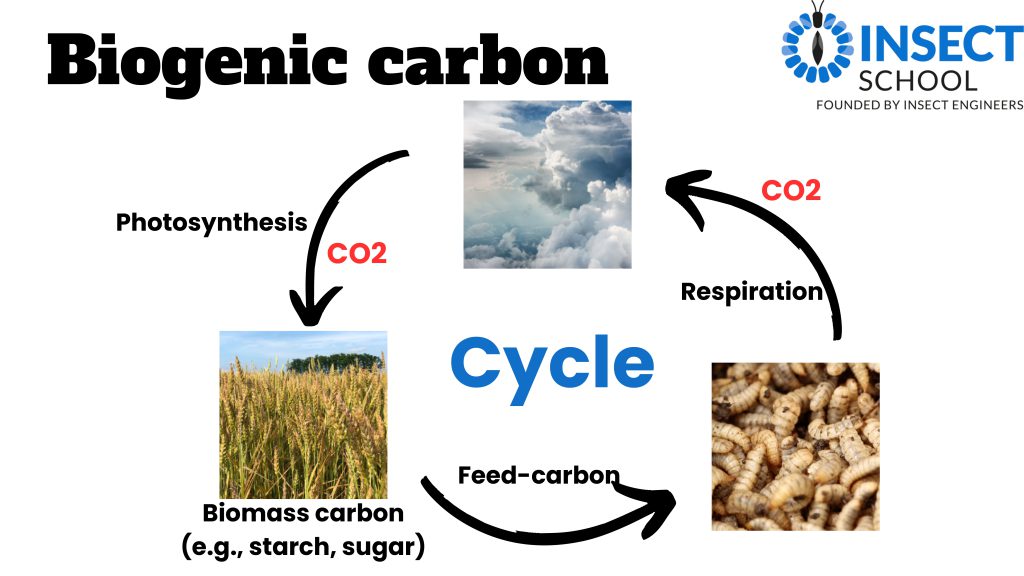
Respirational CO₂ (direct CO₂ emissions) does not contribute to global warming. This is because it belongs to the natural carbon cycle, also known as biogenic carbon. Plants remove this CO₂ from the atmosphere through photosynthesis. Therefore, respirational CO₂ does not increase atmospheric carbon overall.
For example, larval feed such as wheat bran comes from plants. These plants absorb CO₂ during growth. When BSF larvae digest the feed, they release CO₂ back into the atmosphere.
At the same time, farmers cultivate new plants. These plants absorb CO₂ again. As a result, the carbon cycles continuously and does not add new carbon to the atmosphere. Thus, respirational emissions are considered carbon neutral.
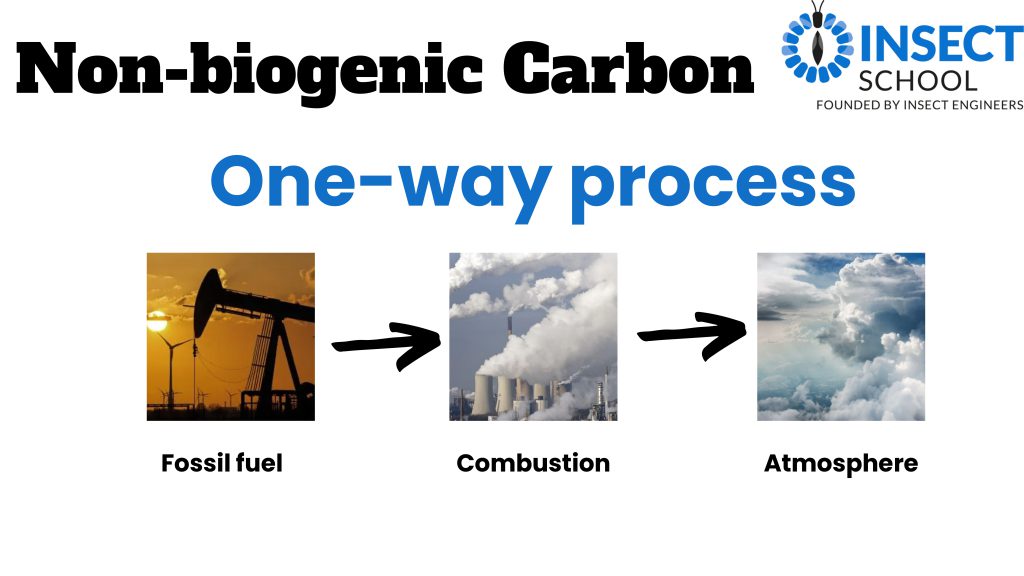
In contrast, non-biogenic carbon comes from fossil fuels such as oil, coal, and gas. These fuels form over more than 1,000 years under high pressure.
However, humans burn them within a short time. This releases stored carbon rapidly. As a result, it adds new carbon to the atmosphere. Therefore, it contributes to long-term global warming.