Biodiesel Production from Black Soldier Fly Larvae
Introduction
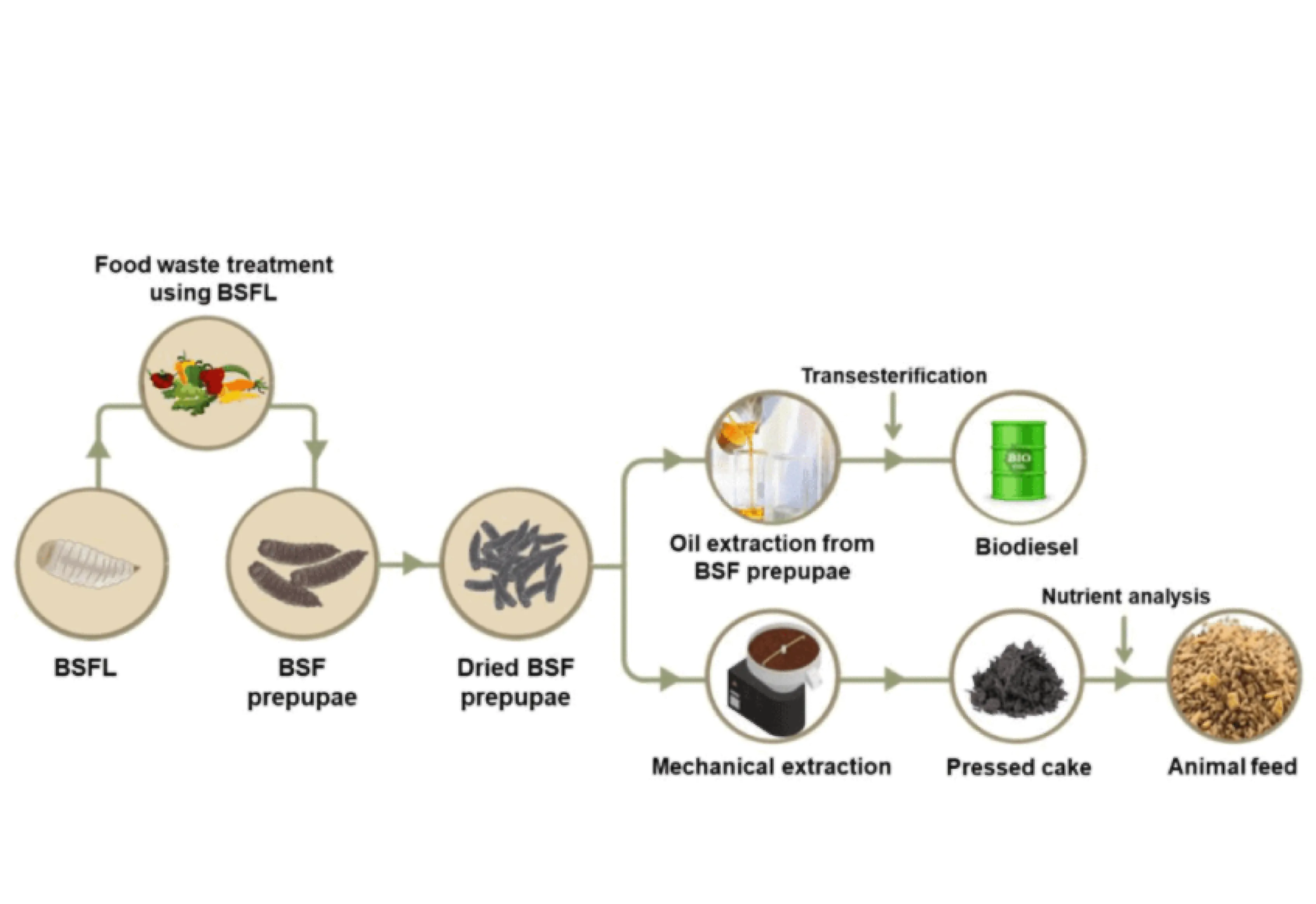
In this study by Sejong University and a Research Institute of Petroleum Technology, biodiesel was synthesized from black soldier fly larvae (BSFL) grown on food waste, and the fuel properties were examined to evaluate its feasibility as a potential transportation fuel in Korea. With the ever-growing concern for sustainability and reducing food waste, this research supplies a promising solution to the problem.
Key Findings
The results showed that the highest yield of biodiesel produced was 86.51% and all parameters of biodiesel produced from BSFL met the Korea fuel standard except for oxidation stability. However, the oxidation stability was improved with the addition of an antioxidant.
The ability of insects, including BSFL, to store energy in the form of lipids makes them a potential feedstock for biodiesel production. BSFL, in particular, have a long development time and self-separation behavior, making them an attractive option.
The process starts by rearing larvae on food waste for 14 days. Researchers then extract lipids and convert them into biodiesel through transesterification. They purify the final product using distillation. Finally, they test its properties against Korean biodiesel standards.
Conclusion
This study shows that BSFL biodiesel can serve as a sustainable transportation fuel. It also helps reduce food waste. Future research should focus on improving efficiency and scaling up production.