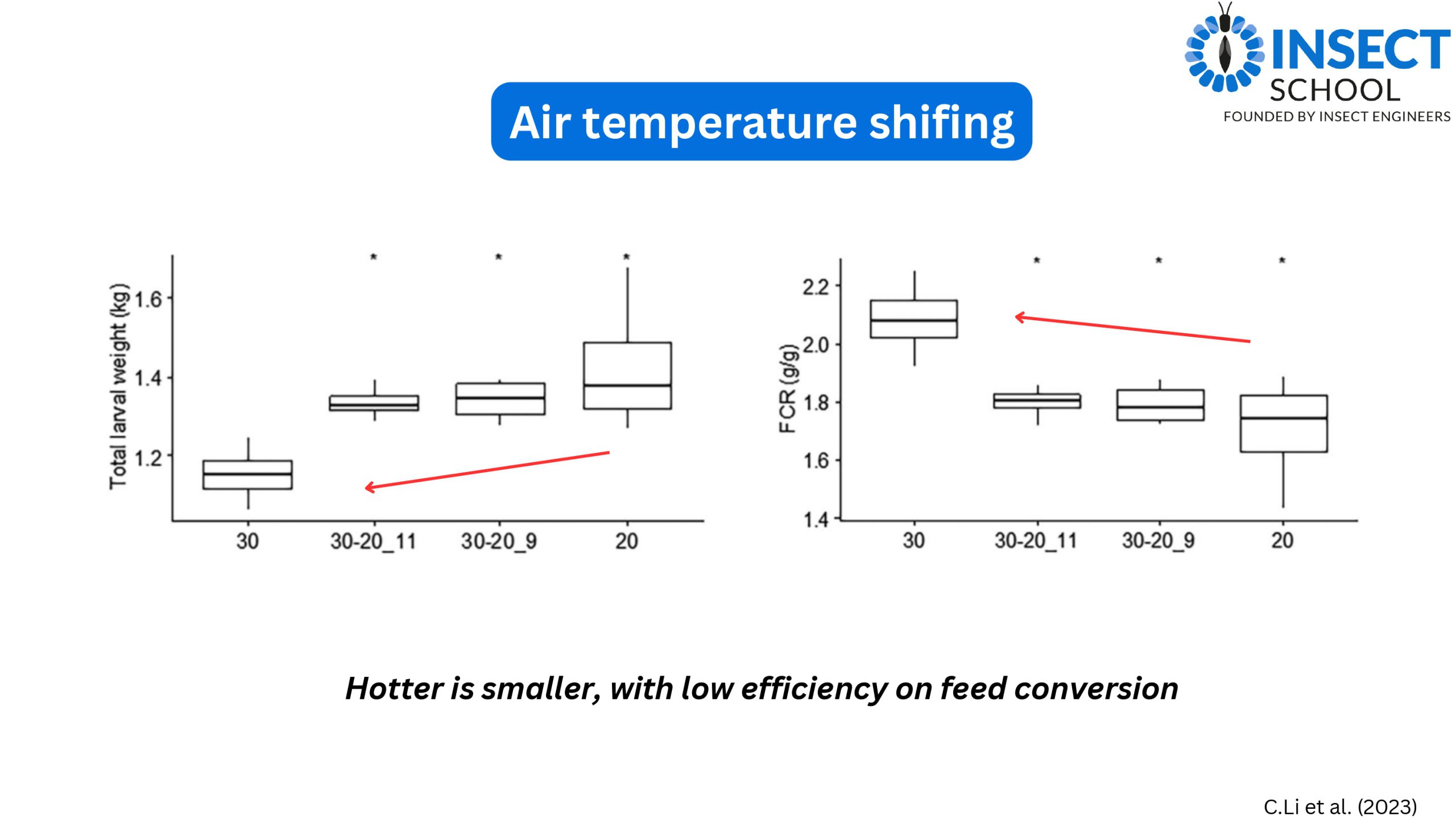
Hotter is smaller: Industrial mass rearing Black Soldier Fly larvae.

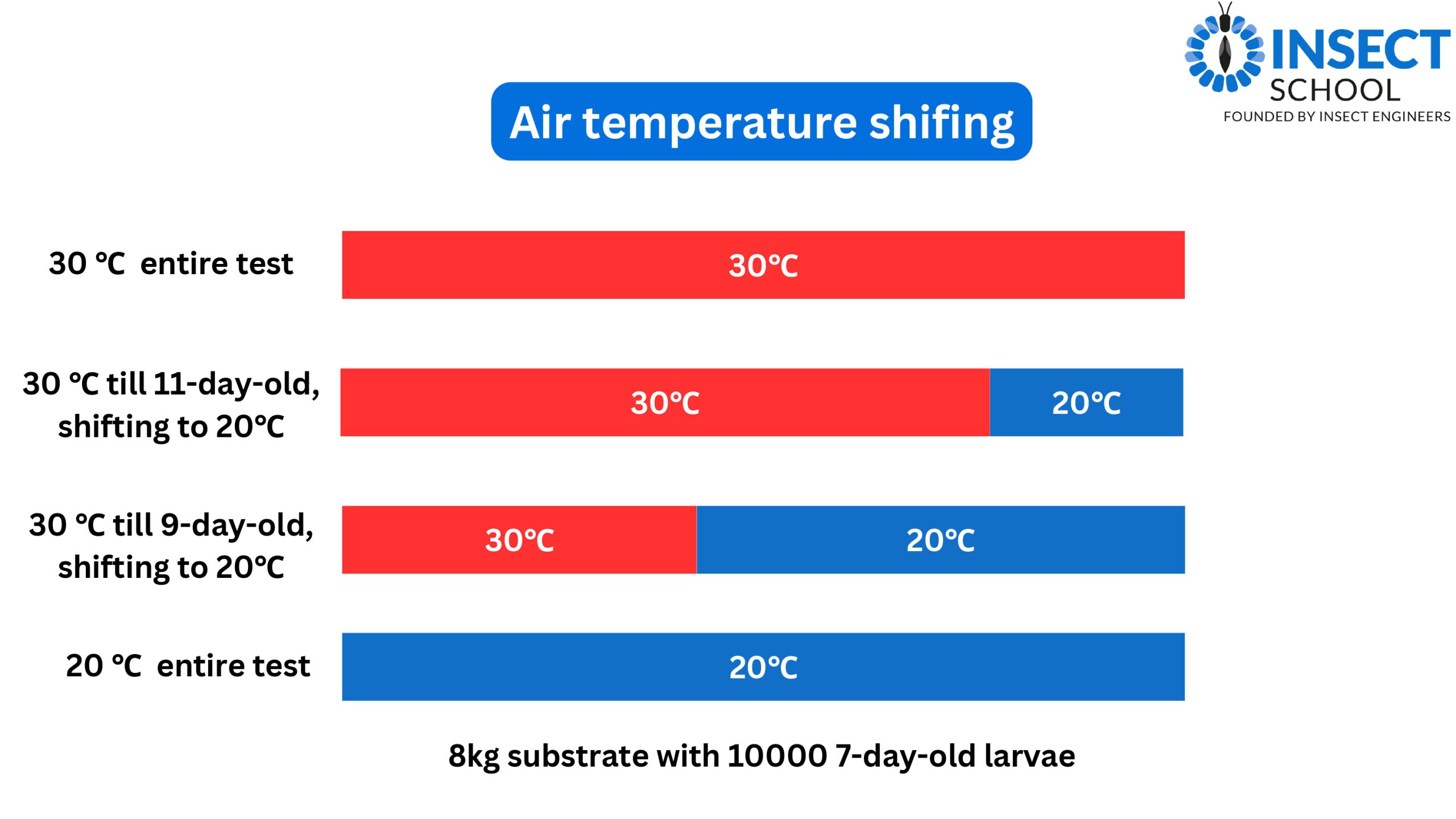
Industrial BSF production can benefit from lower air temperatures, as long as larvae aggregate and generate metabolic heat.
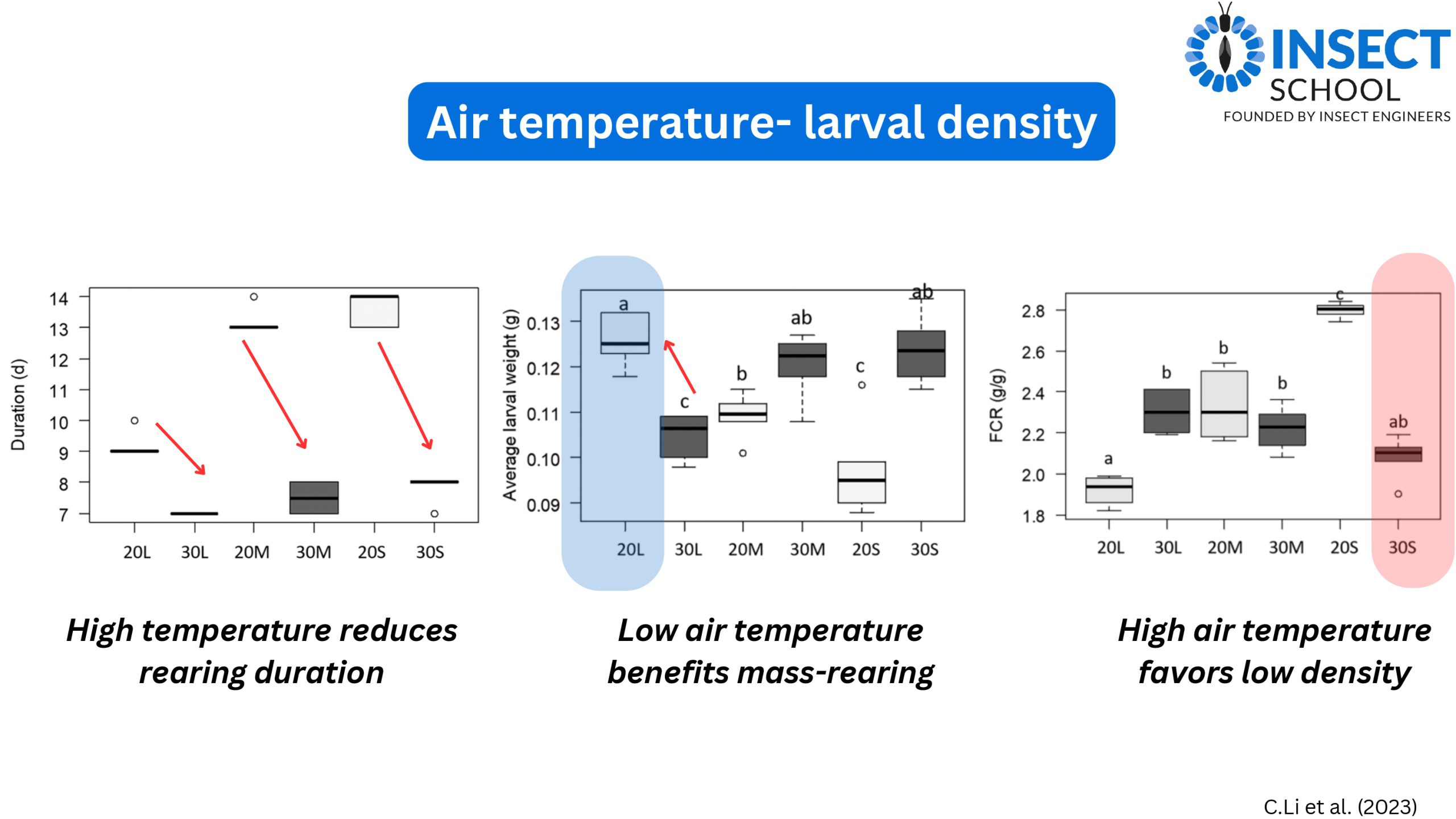
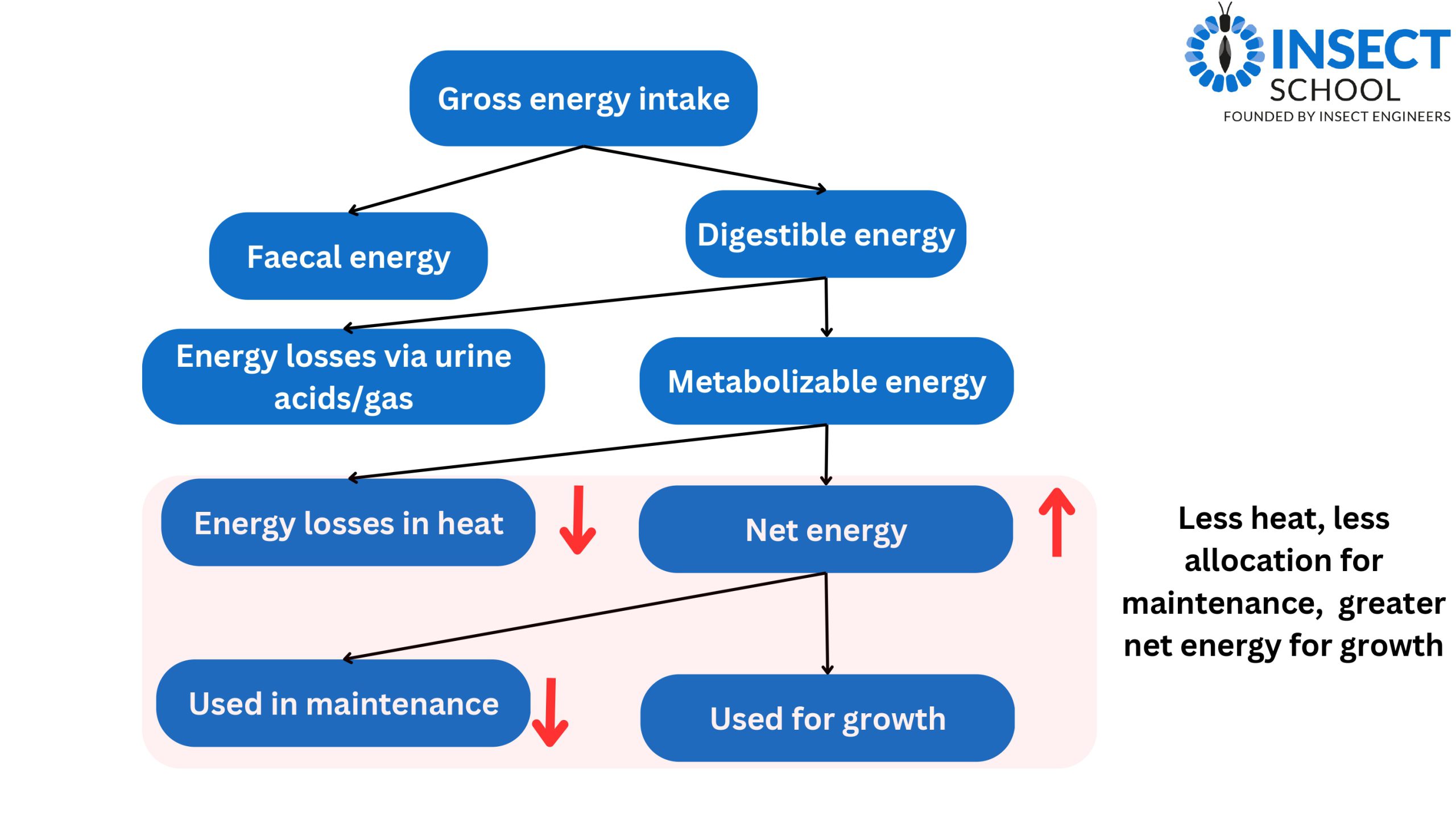
Thermoregulation helps organisms maximize net energy gain for growth. BSF larvae reared at 20 °C often show better feed conversion and larger body size than those at 30 °C. At lower temperatures, larvae spend less energy on stress responses and more on growth.
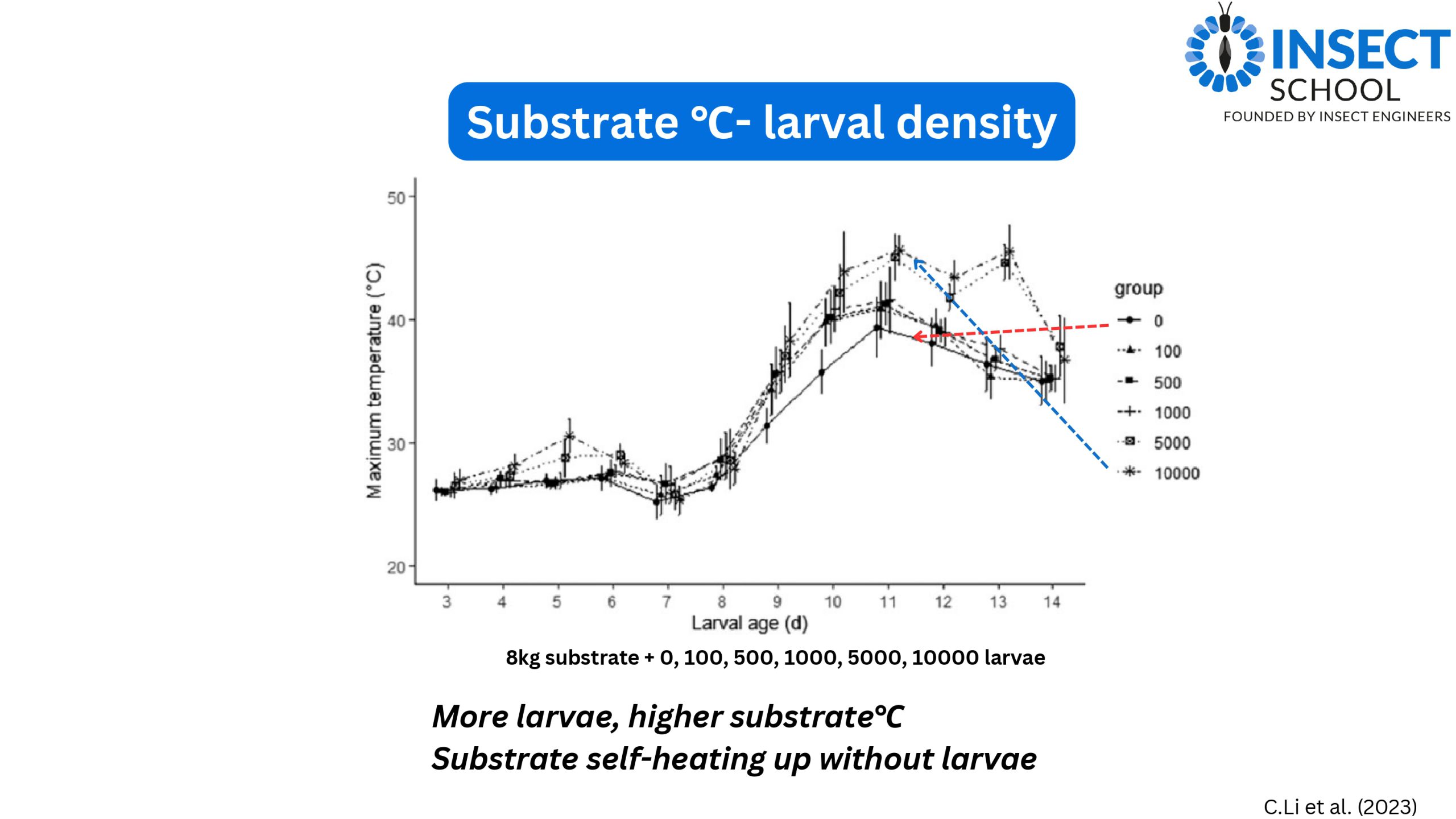
Larvae also benefit from maggot heat under cooler conditions. Through aggregation, they generate and retain heat within the group. This behavior improves digestion and supports faster growth. At the same time, larvae maintain a relatively low metabolic rate, which leads to better overall performance.
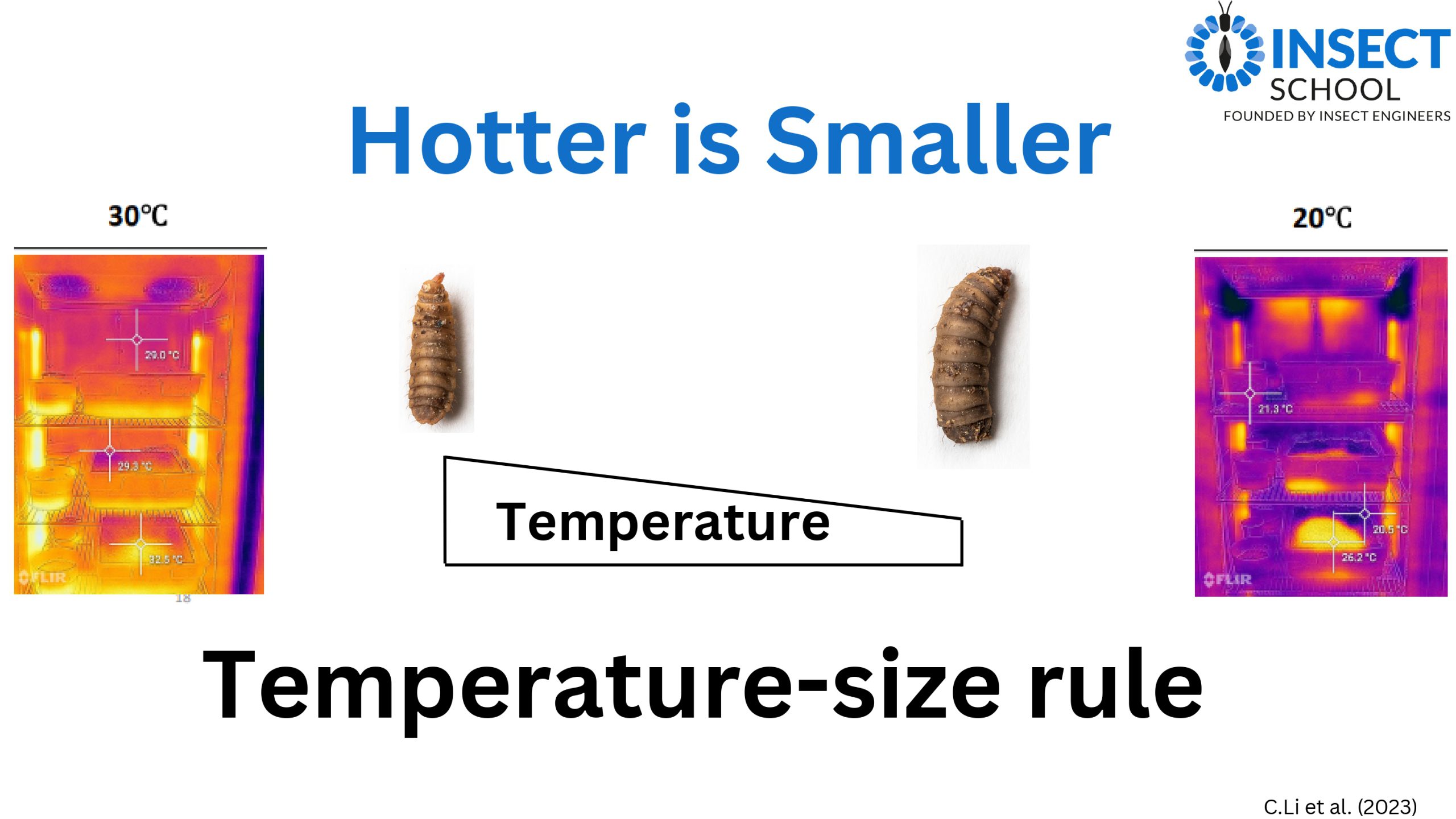
The temperature-size rule states that organisms raised at higher temperatures tend to be smaller. However, this rule does not always apply. At low larval density, higher temperatures (around 30 °C) can still produce good feed conversion and higher individual weight. This suggests that other factors, such as digestive enzyme activity, also influence performance.
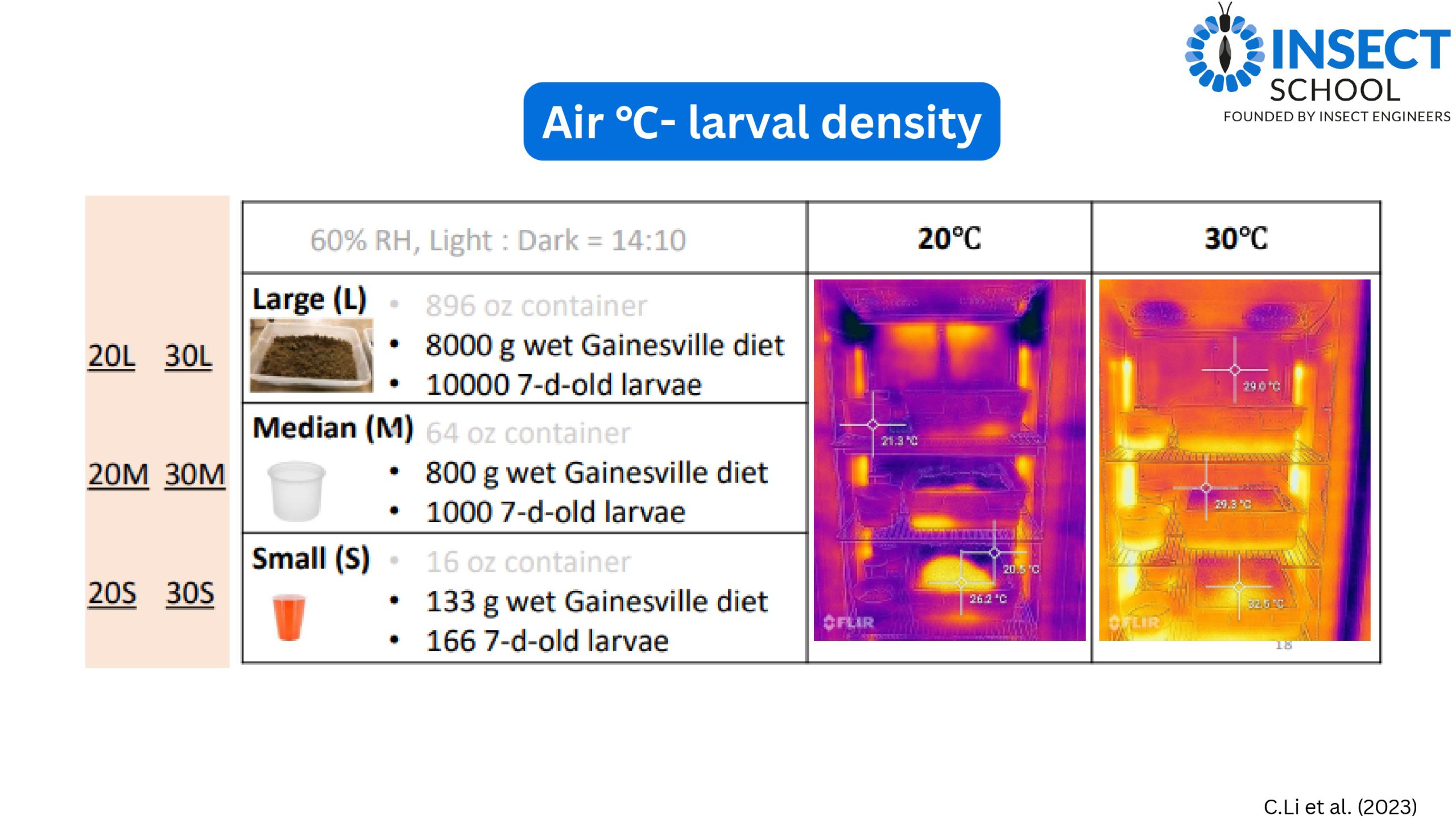
Some insect larvae use extra-oral digestive enzymes. These enzymes work more efficiently in large groups. On an industrial scale (e.g., more than 10,000 larvae per unit), high temperatures can become problematic. Larvae struggle to release excess heat and begin to disperse instead of aggregating. This behavior reduces growth efficiency and often results in smaller larvae.
Comments on this post
Comment posted by Bergeron:
Hello,
Thank you for this intersting article.
What was the dimension (lenght x wide x height) of the Large (L) 896 oz container please ?
Best Regards